

Here is the thesis, stated plainly before a single scene is described: My Househusband Is Gamble King works not because Harold is secretly powerful, but because he chooses not to use that power. That distinction is everything. The drama lives or dies on the gap between what Harold could do and what he permits to be done to him — and that gap, held for three years of in-story time and 61 episodes of screen time, generates more tension than any card game the plot eventually delivers.
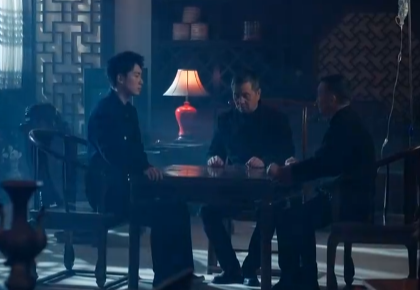
The premise is structurally elegant in the way that only short-form drama can afford to be: a gambling legend, Harold, enters the Dalton household in disguise to fulfill the deathbed promise of his master, Victor Dalton. He is there to protect the family and care for Grace, Victor's daughter. He is not there to be seen, celebrated, or even acknowledged. He takes the role of househusband — domestic, deferential, invisible.
What follows is not a rags-to-riches arc. Harold was never poor. He was never less than. The contempt and ridicule the Dalton household directs at him lands differently when the audience understands this: every sneer is absorbed by a man who could dismantle the entire social order of the room without breaking a sweat. The drama is not about Harold gaining power. It is about Harold choosing, every single day, to surrender the performance of it.
This is the power dynamics lens that gives the show its spine. The hierarchy in the Dalton home is false — a constructed reality in which Harold is at the bottom because he has agreed to be placed there. The drama becomes an extended interrogation of what social status actually measures. Is Harold low-status because the people around him treat him that way? Or is his willingness to absorb that treatment the most radical expression of control the story offers?

Analyze Harold through his dramatic function, and he operates as something rare in the hidden-identity genre: a protagonist whose concealment is entirely selfless. Most undercover-genius dramas use the hidden identity as a delay tactic — the reveal is coming, the humiliation is temporary, and the audience waits for the explosion. My Househusband Is Gamble King complicates this by removing Harold's personal stake in the reveal. He is not there to be vindicated. He is there because a dying man trusted him.
The drama's Chinese title — 这个煮夫是千王, meaning roughly "This Househusband Is a Gambling King" — underscores this irony structurally. The cooking and the card-playing exist in the same body. The man making meals is the man who could break a casino. That the Dalton household sees only one and dismisses it tells the audience far more about the Daltons than about Harold.
His endurance is not passive. It is a daily, active choice — which is precisely what makes the drama's third-act pivot so effective. When the three-year agreement nears its end and Grace is ambushed by a trusted friend, Harold's decision to intervene is not heroism in the conventional sense. It is a debt being paid. He was never going to leave a family he promised to protect in ruins, regardless of how they treated him. He does what he came to do, and then he goes.
Grace's arc is the drama's most uncomfortable mirror for the audience. She is not a villain. She does not scheme against Harold or act with deliberate cruelty. She participates in a household culture that undervalues him — which, the drama quietly insists, is its own kind of harm.
The story's second pivot arrives when Harold leaves after saving the family, and Grace "panicked and searched everywhere for his whereabouts." This is where the social/power dynamics invert completely. For three years, Harold existed below Grace in every visible hierarchy of the household. The moment he exits, she discovers that the hierarchy was an illusion she was living inside. The person she dismissed turns out to have been the structural center of everything she had.
Her frantic search is not a love story beat — or not only that. It is a character undergoing the specific grief of recognizing that her entire framework for evaluating people was wrong. She did not lose a househusband. She lost the only person in her life operating from pure principle.
The short drama format — with episodes running around two minutes each across a 61-episode run — imposes a rhythm that suits the material precisely. Each episode functions as a small escalation, a ratcheting of pressure, until the confrontation at the card table arrives with the force of something that has been building across weeks of accumulated humiliation.
The gambling sequences are not really about gambling. They are the moment when Harold's invisible architecture becomes visible — when the power he has been managing privately is finally made legible to the people who dismissed it. The opponents across the table represent the external threat that triggers revelation; what the drama is more interested in is the internal cost of revelation to Harold himself. He wins. And then he leaves. Winning, for him, was never the point.
Short dramas occupy a specific emotional register that long-form series cannot replicate: they operate on compressed intensity, demanding that every scene land a payload. My Househusband Is Gamble King succeeds because its premise is naturally suited to compression. The central irony — the most powerful man in the room has agreed to be treated as the least — does not need ninety minutes of setup. It needs accumulation. Sixty-one two-minute episodes give the contempt time to calcify, which makes Harold's eventual intervention hit harder than any single dramatic sequence could on its own.
The drama is available with English subtitles and an English dubbed version, which broadens its accessibility considerably. For viewers already familiar with the hidden-identity subgenre — a staple of both Chinese short drama and longer romantic dramas — this entry distinguishes itself not through plot novelty but through tonal restraint. Harold never gloats. He barely speaks more than necessary. The drama's power comes from what it withholds.
If you have ever watched someone absorb undeserved contempt with a composure that felt, in retrospect, like the most sophisticated thing in the room — this drama knows exactly what it is doing.
Where to Watch:My Househusband Is Gamble King is available in full on ReelShort at reelshort.com. English-subtitled and English-dubbed versions are also available on Dailymotion via various upload channels. ReelShort operates on a coin/credit system for episode unlocking; some early episodes may be accessible free of charge.
Q1: What is My Househusband Is Gamble King about?
A: My Househusband Is Gamble King is a 2026 Chinese short drama in which Harold, a legendary gambler, lives undercover as a househusband to fulfill his late master's dying wish of protecting the Dalton family. Despite three years of contempt and ridicule, he endures — until a crisis forces him to reveal his true abilities. He saves the family, then quietly disappears.
Q2: Is My Househusband Is Gamble King available in English dubbed?
A: Yes. An English dubbed version of My Househusband Is Gamble King is available on Dailymotion through multiple channel uploads. An English-subtitled version is also available for viewers who prefer the original audio. ReelShort hosts the full episode collection as well.
Q3: How many episodes does My Househusband Is Gamble King have, and how long are they?
A: The drama consists of 61 episodes, each running approximately two minutes. This micro-episode format is standard for Chinese short dramas and allows for rapid, high-intensity storytelling designed for mobile viewing. The full series can be completed in well under three hours if watched straight through.
Q4: Where can I watch My Househusband Is Gamble King full episodes?
A: Full episodes are available on ReelShort at reelshort.com. The platform uses a credit system, with some episodes accessible for free and others requiring in-app purchases. Informal uploads with English subtitles and dubbed audio also circulate on Dailymotion, though availability on third-party sites may vary.
Q5: What makes My Househusband Is Gamble King different from other hidden-identity dramas?
A: Most hidden-identity dramas build toward a triumphant reveal where the protagonist reclaims status and receives public recognition. This drama subverts that structure — Harold's intervention is not a power grab; it is an obligation fulfilled. He saves the family and then leaves, making the emotional weight fall on Grace's belated recognition rather than Harold's vindication. The drama's restraint is its most distinctive quality.