
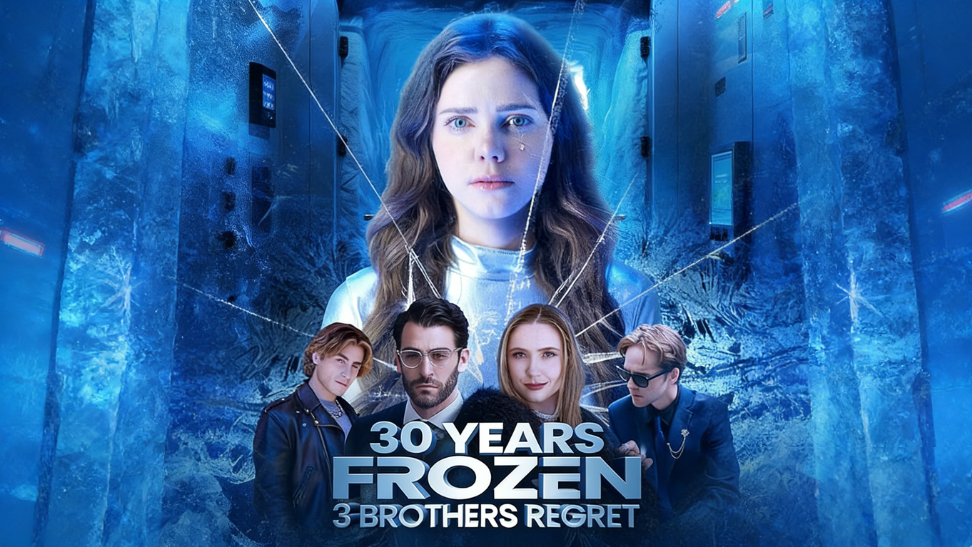
What does it look like when a woman stops fighting to be seen — and simply disappears instead?
That's the question at the core of 30 Years Frozen, 3 Brothers Regret, a 2025 short drama that reached a staggering milestone before most viewers had finished their first watch: 126.1 million views in its first 72 hours, making it the most-viewed video globally on NetShort. Numbers like that don't happen by accident. They happen when a story touches a nerve so specific, so widely felt, that people can't help but share it. And this one does exactly that.
Selene Onassis was adopted into a wealthy family and, for a time, belonged there. Then the biological daughter, Stella, arrived — and with her came a slow, calculated campaign to dismantle Selene's place in the family entirely. The brothers didn't question what they were told. Selene was exiled on her eighteenth birthday — the very day her brothers had made promises to her — and the family ultimately burned a scrapbook she had spent twelve years filling with memories of them.
Selene's response is not a confrontation. It is not a lawsuit or a public accusation. She volunteers for a 30-year cryogenic experiment — essentially choosing to step entirely out of time, to wake up still young, still herself, while everyone who failed her has had three decades to sit inside the wreckage of what they did.
The cryogenic premise sounds fantastical. In emotional terms, it is perfectly logical. It's the fantasy of the person who was never listened to: I'll simply make you feel my absence, since my presence never mattered.
Casting Tiffany Alvord as Selene is a decision that rewards anyone who knows her background. With over 3 million YouTube subscribers and 700 million views, she became one of the platform's first breakout stars, known for honest storytelling and emotional depth. It wasn't until 2024 that she began starring in serialized short-form dramas, and 30 Years Frozen represents the clearest showcase yet of what she brings to the format.
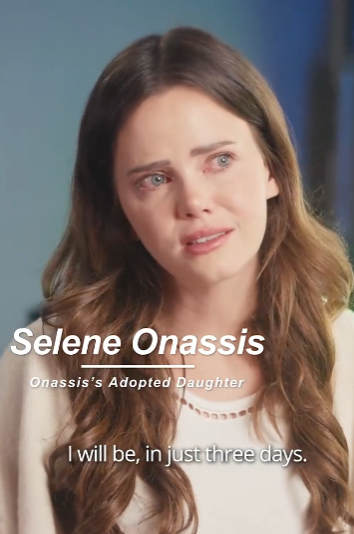
The role asks her to do something counterintuitive: it asks her to recede. Selene doesn't argue, doesn't retaliate, doesn't deliver the kind of confrontation scenes that typically anchor this genre. Her power lies in withdrawal — in the way her face holds everything without releasing it. Alvord's years of performing emotionally honest music for an audience gave her an instinct for exactly this: how to make a quiet moment carry weight. The result is a performance that works precisely because it refuses to perform.
Sam Myerson plays Benjamin, Mick Krause plays Alaric, and Adam Santa Cruz plays Orion — the three Onassis brothers whose collective failures set the story in motion. The drama's sharpest structural insight is that none of them are monsters. They are something more realistic: men who accepted a narrative they found convenient without asking the questions that would have complicated it.
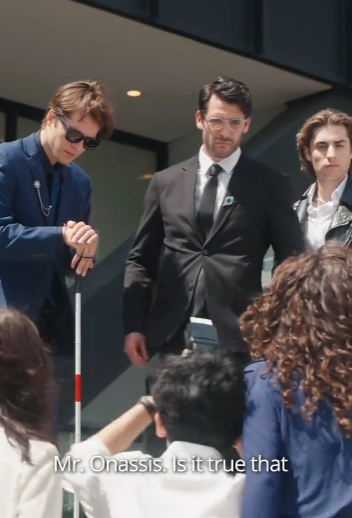
Benjamin's failure is one of unchallenged authority. Alaric's is more complex — he is blind, and Mick Krause committed to the role so fully that he refused to open his eyes for the entire shoot in preparation, a commitment that encouraged the broader cast to embrace method acting throughout production. That detail matters: Alaric's inability to see is both literal and metaphorical, and Krause playing it from the inside out gives the character a texture that a more surface-level performance would have missed. Orion, played by Santa Cruz, is the most emotionally permeable of the three — it is Orion who confronts his brothers after they burn Selene's scrapbook, the one whose conscience breaks earliest and loudest.
Their regret, when it arrives in full, is not cathartic. It is just the long bill for a debt they let accumulate.
Leigh Szymeczek plays Stella with a composed menace that keeps the character from tipping into caricature. Stella callously destroys Selene's cherished scrapbook despite the maid's desperate pleas to stop — and does so with a calm that reveals her clearly: this is not impulsive cruelty, it is the erasure of evidence. The family would later discover that Selene's severe asthma stemmed from a near-drowning incident — and that Orion's account of who saved him that day directly contradicted Stella's version of events. The rot goes deeper than lies of convenience. Stella built her entire position on fabrications that touch life and death.
What makes her function so well as an antagonist is that she never stops playing the victim. By the time the brothers begin to doubt her, she has so thoroughly embedded herself in their understanding of reality that unraveling her takes everything the story has left.
Buried beneath the family betrayal narrative is a thread that recontextualizes Selene's sacrifice entirely. Selene had secretly volunteered for the cryopreservation experiment — keeping her identity hidden — and the timing coincided with Alaric's need for a cornea transplant, with Selene's donation offering hope for his sight. She didn't just leave. She left while quietly giving something back to the brother who never defended her. That detail transforms the ending from a departure into a kind of devastating generosity — and it's the kind of emotional twist that stays with you.
The viewers watching 30 Years Frozen, 3 Brothers Regret on loop are not here for the science fiction. They are here because the shape of Selene's story — being systematically disbelieved by the people closest to you, watching someone else rewrite your place in your own family — is not abstract. Produced in Los Angeles over just 8 days and under budget, this is a story that achieves its emotional scale not through spectacle but through specificity. It knows exactly which wound it's pressing on.
For 30 Years Frozen, 3 Brothers Regret where to watch, the full series is available on:
● NetShort (official platform, full episodes)
● ReelShort: available via app
30 Years Frozen, 3 Brothers Regret is ultimately a story about what happens when love becomes conditional — and what a person does when they finally stop trying to meet conditions that keep moving. Selene didn't fight for her place in the family. She made her absence the argument. And thirty years later, it turned out to be the only one that ever worked.