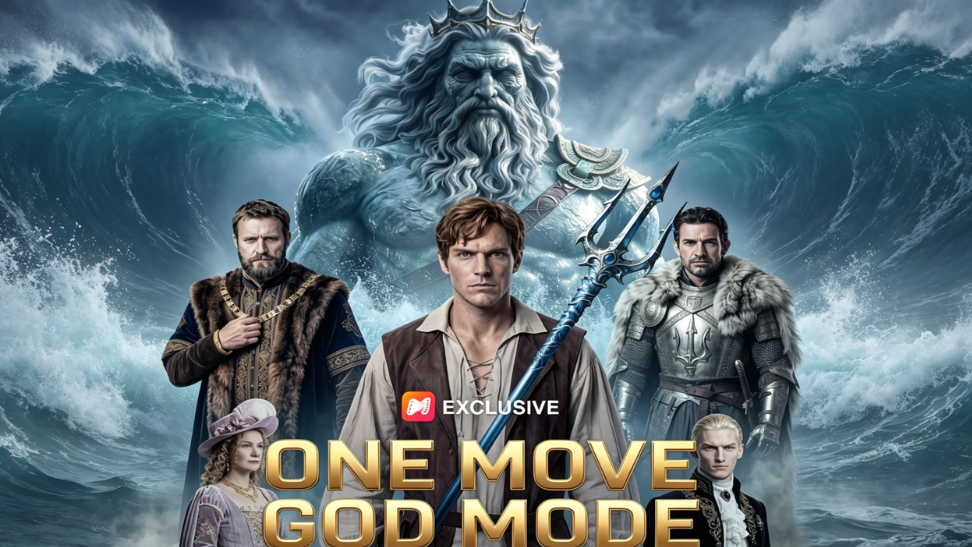
① This is not a slow-burn story.
The pacing is ruthless, the power gap is exaggerated on purpose, and the payoff feels almost addictive because it's so immediate. If you've been burned by underdog dramas that take twenty episodes to get anywhere interesting, this short drama earns its first major moment fast — and keeps escalating from there.
② The mythology isn't homework.
You don't need to know anything about Poseidon, Olympus, or Greek gods going in. The focus stays on action and Ethan's rise rather than deep lore. The mythological framework is a vehicle, not a subject. It exists to make the stakes feel enormous — and it works.
③ The humiliation scenes are intentional and intense.
The series contains intense humiliation, fighting, and revenge themes, best suited for teens and adults. The discomfort is the point. The show earns its catharsis by making you sit in the injustice long enough to feel it.
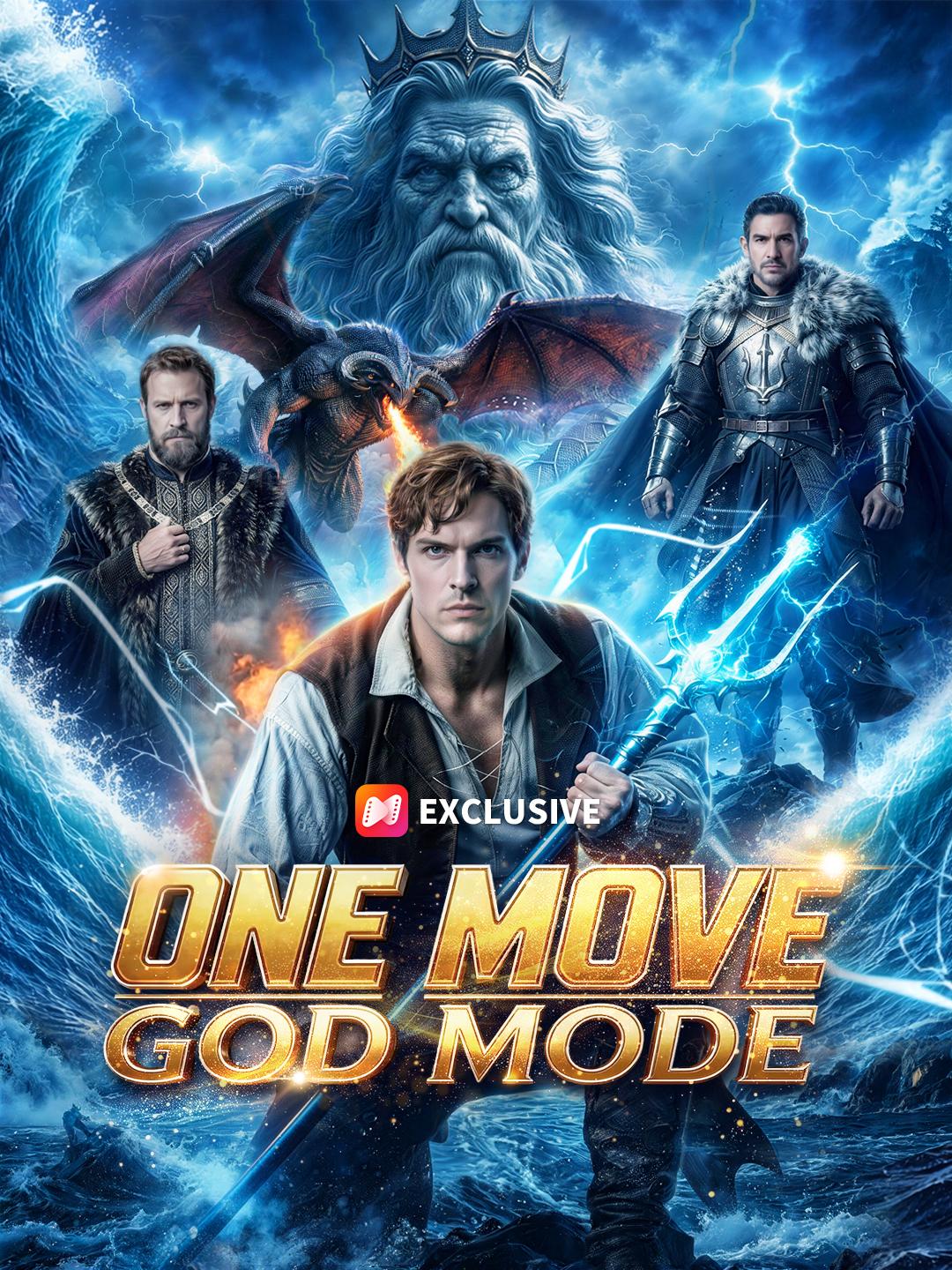
Ethan, as a ethan poseidon son, has spent his entire life being told he's worthless. Not challenged, not overlooked — actively convinced of his own inadequacy. He lives as a farmer, he carries a rusted pitchfork, and when a prestigious knight selection trial opens its gates to the ambitious and the powerful, he shows up anyway.
The nobles laugh. Of course they do.
Then the pitchfork transforms. Because it was never a pitchfork — it was his father Poseidon's hidden trident, disguised and waiting. In one move, the joke becomes the most feared person in the arena. Ethan awakens his divine heritage, unleashes godlike power, and begins his unstoppable rise from the bottom to legend.
From there, the show tracks his journey outward — crushing the enemies who built their power on his silence, and ultimately traveling alone to Mount Olympus, breaking through divine barriers, and facing the gods including Zeus.
But underneath all of that spectacle, the real story is simpler and sharper: what happens to a person when they finally stop believing the lie that was told about them?
| Story Phase | What's Happening | What You're Feeling |
|---|---|---|
| Episodes 1–5 | Ethan endures public humiliation at the trial; nobles mock his weapon and his presence | Frustration, secondhand shame, the specific itch of watching something unfair go unchallenged |
| The Trident Reveal | The rusted pitchfork transforms; Ethan's bloodline awakens | Sudden explosive release — the kind that makes you physically sit up |
| Episodes 6–19 | Power grows, enemies fall one by one, the world begins to reckon with who he actually is | Satisfaction layered with growing dread — how high does this go? |
| Episodes 20–38 | Poseidon arrives in a golden chariot, extinguishing flames; everyone kneels; a heartbreaking goodbye follows | Emotional gut-punch — the revenge arc suddenly becomes a father-son story |
| Episodes 39–46 | The final arc delivers peak satisfaction — divine power, emotional reunions, and a new legend begins | Closure, awe, and the specific aftertaste of a story that earned its ending |
Here's the thing about One Move God Mode that doesn't get said enough: the fantasy elements are almost beside the point.
Strip away the gods and weapons, and the core dynamic is painfully familiar — being underestimated, being mislabeled early in life, and never quite escaping it. People around you deciding your limits before you even test them.
The nobles in this story function less as villains and more as a system — one that maintains itself by controlling who gets access to legitimacy. They didn't bother to assess Ethan. They categorized him on sight and moved on. That's not a mythological problem. That's a very human one.
What makes Ethan's arc emotionally resonant rather than just viscerally satisfying is that his transformation isn't purely external. The trident reveal doesn't just change how others see him. It changes how he sees himself. His journey emphasizes the idea that true strength was always inside him — which means every humiliation he endured wasn't evidence that he was nothing. It was evidence that the world measuring him was using the wrong scale entirely.
Most fantasy dramas hand their hero a sword. One Move God Mode hands Ethan a rusted farming tool — and that choice is doing significant narrative work.
A sword signals readiness. A pitchfork signals labor, dirt, the bottom of the social ladder. Ethan doesn't walk into that arena as a hidden warrior in disguise. He walks in as exactly what everyone decided he was. The weapon doesn't elevate him in anyone's eyes before the reveal — it confirms their judgment.
The trident summoning, the water vortex, the lightning-charged cavalry — it all clicks together as each power interacts. But what lands emotionally isn't the spectacle of the transformation. It's the irony of it. The very object they used to dismiss him was the proof of everything they refused to see. The humiliation and the divinity were always the same object. They just never looked closely enough.
Watch this if you:
Crave immediate payoff over slow character development
Enjoy mythology as a flavor rather than a study
Have ever been told you weren't enough by someone who turned out to be wrong
Want something that feels genuinely epic at short-drama scale
This might not be your thing if you:
Prefer nuanced villain motivations over clear-cut antagonists
Find wish-fulfillment power arcs emotionally unsatisfying
Want complex romantic subplots as a primary draw
One Move God Mode where to watch:
It premiered as a NetShort exclusive on March 28, 2026. Here's where to find it:
NetShort (official, best quality, full series) → Available via the app to watch "one move god mode" netshort plot
MiniShort/ Netshot Website: As you noted, the series is a trending title on these platforms. While the first 10–20 episodes are often available for free as a preview, the remaining chapters usually require unlocking via a subscription or virtual currency (coins).
One Move God Mode Dailymotion: Full episodes with English subtitles are available on Dailymotion for browser-based viewing without an app download.
Pro tip from the fan community: start with the first few episodes on Dailymotion to feel the rhythm, then switch to the NetShort app for uninterrupted viewing — many fans binge 10–15 episodes per session because each one ends on a strong hook.
One Move God Mode is what happens when a story trusts its central irony completely. The most powerful bloodline in the room spent years being laughed at. The weapon that could shake the heavens was being used to turn soil.
They handed Ethan a trial they thought he'd fail. He handed it back to them differently.
That's not just god mode. That's the oldest story there is — told faster, louder, and with significantly more lightning than usual.