

Looking for maid-themed short dramas? These MiniShort titles use the maid premise as a dramatic lever — not a costume. Whether the setup is cold-blooded revenge infiltration, a class-war romance, or a rebirth power fantasy, each series on this list earns its place through distinct emotional stakes, strong lead performances, and the kind of cliffhanger pacing that makes 90-second episodes dangerously easy to chain-watch. Below are five short dramas currently streaming on MiniShort, ranked by dramatic ambition and reviewed without filler.
Quick answer: The five maid short dramas on MiniShort are: Maid's Vendetta, Maid for My Nemesis, CEO The Maid Is Your Stunning Wife, Revenge Maid, and Greedy Maid — spanning revenge infiltration, enemies-to-lovers romance, mistaken identity, and rebirth fantasy.
Twenty years of patience distilled into a single alias. Maid's Vendetta opens with a woman who has already done the hard part: she has survived the destruction of her family, rebuilt herself under the name Raven, and walked back into the household of the woman who caused it all. Cosette Hatch plays Diana/Raven — the former heiress who watched her father seduced away by the family tutor Sophie (played by Dakota Raen), her younger brother killed in the chaos that followed, and her mother broken by grief. Sophie didn't just ruin Diana's family. She replaced it, moving into the Lexon wealth structure and building a comfortable life on the ruins.
The structural intelligence of this series is that Diana's revenge is already in motion when the story begins. There is no origin montage or slow build to the plan. She's inside the house. She's wearing the uniform. The audience is dropped into the middle of a long game, which creates immediate dramatic tension: every interaction between Raven and Sophie carries the weight of what Diana knows and Sophie doesn't.
Paul Addison plays Ethan, Sophie's husband, and the series uses his presence carefully. He is neither straightforwardly villainous nor fully sympathetic — his entanglement with Diana's history is more complicated than it first appears, which prevents the revenge narrative from becoming a simple two-party conflict. At 80 episodes, Maid's Vendetta has the room to develop that complexity, and it uses it.
Why it works: The maid uniform is a daily act of psychological warfare. Diana serves Sophie tea, folds Sophie's clothes, and waits — and every episode of that waiting is dramatized as controlled, cold fury rather than passive suffering.
Best for: Viewers who want a revenge drama built on long-game strategy rather than explosive confrontations. The satisfaction here is slow, deliberate, and cumulative.
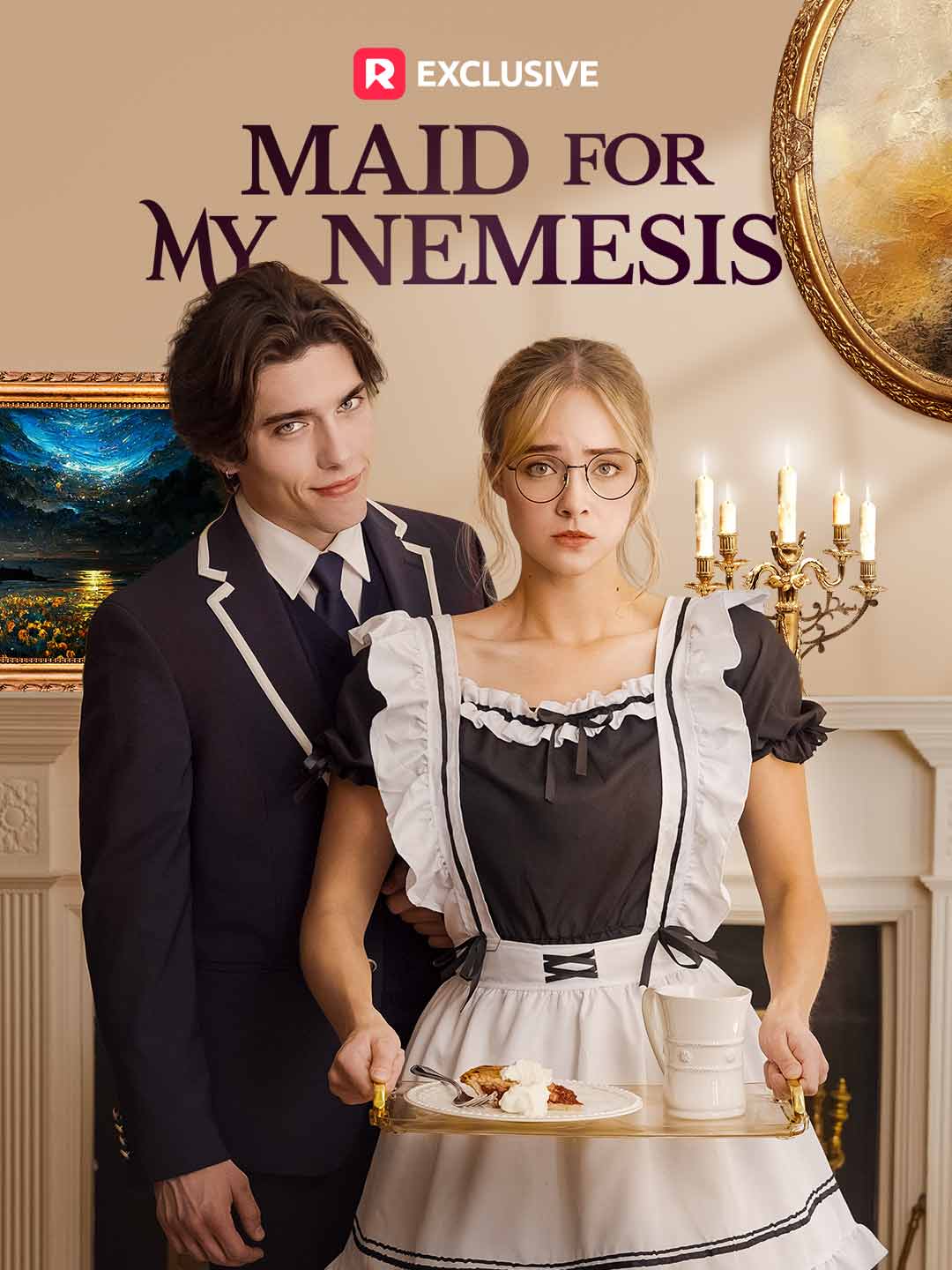
Class president by day, maid by night — and both jobs are at the same address. Maid for My Nemesis is the tonal counterpoint to Maid's Vendetta: lighter in atmosphere, sharper in comedic timing, and built around the specific electricity of two people who genuinely cannot stand each other being forced into close quarters. Emma Johnson (played by Meg Bush) is the scholarship student holding together a fabricated image of normalcy at an elite private school while quietly funding her father's medical bills through a waitress job. Lucas Bennett (played by Ben Armstrong) is the wealthy bad boy who gets her fired — then offers her a replacement income as his personal maid, with one condition: the arrangement stays secret.
The power dynamic at the center of Maid for My Nemesis is more layered than it initially appears. Emma is Lucas's boss at school — she won the class presidency he ran for and he is technically her vice president. He is her boss at home. That inversion creates a constantly shifting balance of authority between them that neither character can fully control, which is where the series' best tension lives.
IMDb reviewers consistently highlight Ben Armstrong as a standout — praised for genuine screen presence and expressive performance that elevates scenes beyond the script. Meg Bush holds the center with precision: Emma is principled without being preachy, proud without being brittle. Their chemistry is the reason the 82-episode run never loses its forward momentum.
The series' most interesting structural choice is Brielle, the cheerleader antagonist played by Sydney Culbertson, who provides consistent external pressure on Emma and Lucas's arrangement. She functions as the social stakes made flesh: the person who would most benefit from exposing their secret and who comes closest to doing so across the series' run.
Why it works: Lucas's method of 'helping' Emma — framing his financial support as compensation for maid duties rather than charity — is one of the series' most psychologically astute character decisions. It lets Emma keep her pride intact while accepting help she desperately needs.
Best for: Viewers who want class-war romantic tension with real comedic bite and leads whose chemistry makes the enemies-to-lovers arc feel genuinely earned rather than inevitable.
Mistaken identity is one of drama's oldest engines, and CEO, The Maid Is Your Stunning Wife runs it with a twist that makes it structurally interesting: the mistake isn't discovered for a year. An adopted daughter, forced into marriage with a wealthy older man to protect the grandmother who raised her, arrives at the ceremony nearly blind without her glasses and walks down the aisle with the wrong man entirely. Her actual husband leaves the country the same day, marriage certificate in hand. Twelve months later, she takes a maid position at a large estate — and the famous young president who returns from abroad is unmistakably familiar, though she can't place why.
The dramatic tension this setup generates is specific and sustained: she knows something is off about him. He has a wife he has never properly met. Neither of them has the complete picture. The series uses that information gap carefully — not as a device to be resolved quickly, but as the source of every meaningful interaction between the leads across the first half of the series.
What lifts CEO, The Maid Is Your Stunning Wife above standard mistaken-identity fare is the emotional logic of the heroine's position. She married a stranger to save her grandmother. She took a maid job because she needed work. Every choice she has made has been practical and selfless, and she has no idea that the man she's now serving is legally her husband. The dramatic irony is layered rather than simple, and it rewards patient viewers.
Why it works: The series understands that mistaken identity is most affecting when the audience can see exactly what the characters are missing — and can measure the cost of that blindness in real time.
Best for: Viewers who enjoy slow-burn reveals built on dramatic irony rather than confrontation, and who want a female lead whose circumstances are genuinely constrained rather than artificially manufactured.
Where Maid's Vendetta is built on cold strategic patience, Revenge Maid is interested in the aftermath. The maid here executes her plan — she frames the mistress, seduces the husband, uses the son — and the revenge works. She wins. And then she feels nothing. That emotional hollowness after a successful betrayal is rarely the subject of revenge drama, which makes Revenge Maid one of the more psychologically honest entries in the genre.
The series earns its darker register by refusing to treat revenge as a satisfying endpoint. The maid gets what she came for and discovers that the getting doesn't fill the space the wound left behind. That's a more interesting dramatic proposition than a triumphant finale — and it makes Revenge Maid worth watching for viewers who have grown tired of revenge narratives that treat retribution as a clean resolution.
Why it works: The emptiness after the revenge lands is the real subject of this series. It reframes the standard genre victory as the beginning of a different, harder problem — and the drama is honest enough not to resolve that cheaply.
Best for: Viewers who want a revenge short drama that interrogates its own genre conventions. The moral ambiguity here is genuine, not decorative.
Rebirth narratives — where a character dies, resets to an earlier point in their life, and uses foreknowledge to reclaim what was taken — are a staple of short drama. Greedy Maid grafts the trope onto a corporate revenge premise: a business giant is deceived by his maid, loses everything as a result, and — after rebirth — returns with complete knowledge of how the betrayal was engineered and exactly how to dismantle it.
The genre logic here is distinct from the other entries on this list. Greedy Maid isn't about patience or infiltration or moral complexity — it's about the satisfaction of a man who already knows the ending running the opening moves with absolute precision. The pleasure is watching someone who was once helpless operate with total informational advantage, dismantling a deception they couldn't stop the first time.
For viewers who find standard revenge dramas too slow in their early setup, the rebirth structure compresses that phase entirely. He doesn't need to investigate or plan — he already knows. The drama begins in the middle of the reclamation, which gives Greedy Maid a momentum from Episode 1 that most revenge series don't achieve until their midpoint.
Why it works: The rebirth structure removes the investigative phase of a revenge narrative and replaces it with something more propulsive: a man executing a plan he designed in a previous life, step by deliberate step.
Best for: Viewers who want a fast-moving rebirth revenge fantasy with corporate-power stakes and a protagonist who operates from a position of total informational control.
The answer depends on what you want from the genre:
• For strategic, cold-burn revenge: Maid's Vendetta — 80 episodes, IMDb 7.6, starring Cosette Hatch
• For enemies-to-lovers with comedic tension: Maid for My Nemesis — 82 episodes, IMDb 7.5, starring Meg Bush and Ben Armstrong
• For layered mistaken-identity drama: CEO, The Maid Is Your Stunning Wife
• For moral complexity after the revenge lands: Revenge Maid
• For fast-moving rebirth fantasy: Greedy Maid
All five are available on MiniShort. The first episodes are free — no account required to start watching.









![[Dubbed] Revenge Maid Review](https://v.minishort.com/b1265344voduse1318177724/ecc8c0501397757912474047428/xAXauja2l9wA.jpg)