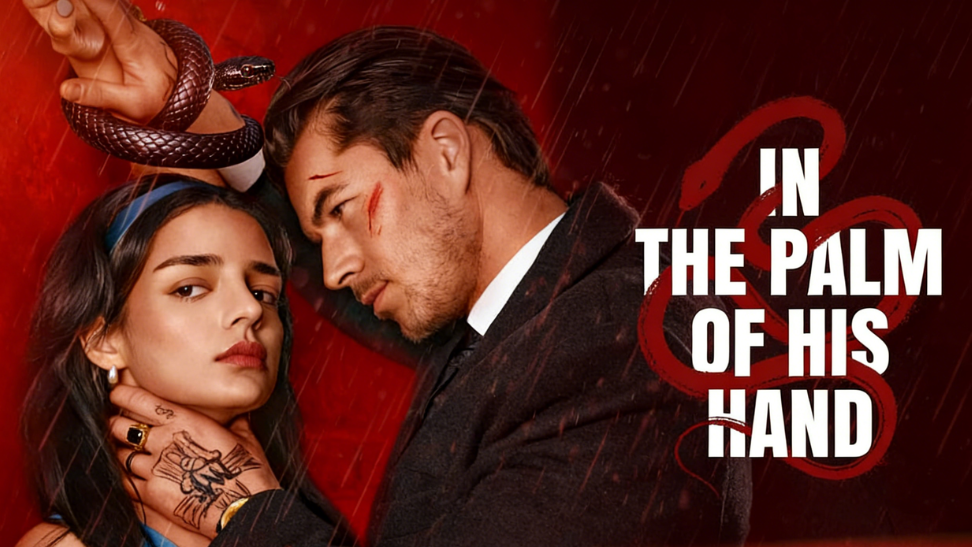
What happens when a college student accidentally saves the most dangerous man in the city — and he decides she belongs to him? That's the deceptively simple premise behind In the Palm of His Hand. With a verified 8.3 out of 10 on IMDb and 73 episodes of escalating tension, it has found an audience that keeps growing. This review breaks down what the series actually delivers, who makes it work, and whether the hype is deserved.
Quick verdict: A dark mafia romance with genuine dramatic depth, a standout lead performance from Chase Mattson, and a villain roster that earns real audience investment.
| Title | In the Palm of His Hand |
| Platform | MiniShort / ReelShort |
| Year | 2026 |
| IMDb Rating | 8.3 / 10 |
| Total Episodes | 73 |
| Lead Cast | Chase Mattson, Maria Barseghnian, Laike Jowers, Emily Lemoine, Allen Perada |
| Genre | Mafia Romance, Dark Drama |
| Where to Watch | MiniShort / ReelShort — free first episodes, coin unlock for full series |
The series opens mid-chaos. Matteo Franconi — head of the Standyne Mafia and one of the most wanted criminals in the city — has just made a fatal enemy inside his own organization. In Episode 1, he kills Donny, a loyal capo who served his adopted father Marco Franconi, and the blowback is immediate: Matteo is ambushed and badly wounded on the street.
That's where Shelby Yates finds him. A college senior and daughter of Professor Gregory Yates, Shelby is not the type of woman who runs in criminal circles. But she pulls Matteo from the danger anyway — and in Episode 2, to protect his cover from approaching enemies, she kisses him. One impulsive act, and the don is fixated.
What follows is not a standard romance. Matteo doesn't ask. He shows up at Shelby's university the next morning and announces, in front of her father and the school chancellor, that he intends to marry her. He funds her father's research lab to win Gregory's approval. He points a gun at himself in a display of obsessive devotion. Every move he makes is the move of a man who has never been told no — and has no intention of hearing it now.
Episode 4 scene: Matteo arriving at Shelby's class and announcing his marriage intentions in front of her father and the school chancellor is the series' defining early moment — uncomfortable, absurd, and completely riveting.
The central complication is Harry, Shelby's existing boyfriend. Harry is a gambling addict deep in debt — and he has been using Shelby's family finances as a lifeline. When Matteo enters the picture, Harry doesn't protect Shelby. He sells her. He extorts Matteo, trading Shelby's love for cash to clear his debts. It's a clean, efficient betrayal that removes Shelby's safety net and leaves her with no clean exit from Matteo's world — ultimately walking down the aisle with the don.
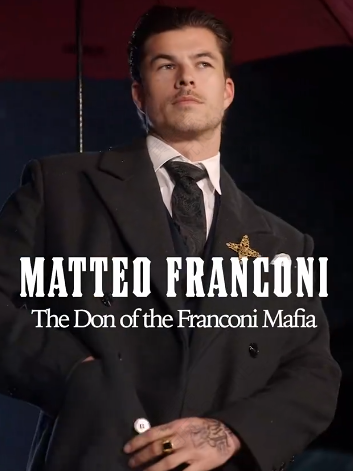
Chase Mattson, a Los Angeles-based actor, plays Matteo Franconi. Mattson brings a precision to the role that the character demands: Matteo is not a softened version of a dangerous man. He is genuinely threatening. He kills Donny in the opening scene without hesitation. He funds a university lab to manipulate a father into blessing a marriage his daughter hasn't agreed to. These are not the actions of a man who has left his mafia instincts behind; they are mafia tactics applied to domestic life.
What makes the performance compelling is the gap Mattson maintains between Matteo's public danger and his private fixation on Shelby. In scenes with his enemies, he is ice-cold. In scenes with Shelby, something genuinely unresolved surfaces — not sentimentality, but a real uncertainty about whether this man, who has controlled everything and everyone around him, knows how to want something he cannot simply take. The series is honest enough to keep that question open rather than resolving it too early.
Performance note: Mattson plays Matteo's obsession as a form of vulnerability rather than confidence — the don who fears losing Shelby far more than he fears any rival in the Standyne Mafia.

Maria Barseghnian plays Shelby as a woman in genuine conflict rather than a passive object of the plot. Shelby isn't naive — she understands exactly what Matteo is, and her resistance is coherent rather than performative. She loved Harry. She planned a future with him. The moment Harry sells her out to Matteo is a real loss, not just a plot mechanism, and Barseghnian plays the aftermath of that betrayal with care: Shelby's eventual movement toward Matteo isn't Stockholm syndrome dressed up as romance, it's a woman reorienting after the person she trusted proved unworthy of it.
Her dynamic with Matteo works because she is never entirely convinced by him. Even as their relationship deepens, she maintains a wariness that keeps the tension alive. Barseghnian has previously appeared in ReelShort's Once Upon a Breakup and Ruthless Mafia Daddy, and In the Palm of His Hand gives her the most layered material she has worked with on the platform.
Florida-born actor Laike Jowers plays Harry, and the role is critical to why the series works. Harry is not a straightforward villain. He is a coward — a man who genuinely cannot choose love over money when the choice is made real. Jowers plays him with just enough charm in the early episodes that his eventual betrayal stings rather than simply confirms what the audience already suspected. When Harry extorts Matteo by trading Shelby's affections for cash to clear his gambling debts, the scene lands as a genuine gut punch precisely because Jowers has made Harry seem, if not admirable, at least humanly understandable up to that point.
Emily Lemoine plays Francesca, the biological daughter of ex-Don Marco Franconi and Matteo's adopted sister. Her obsession with Matteo is part sibling rivalry, part power politics: she wanted to cement her control of the Franconi family by marrying him. When Matteo announces his engagement to Shelby — a commoner with no standing in the mafia — Francesca's response escalates across the series from scheming to outright sabotage.
Francesca is the series' most unpredictable character because her motivations are genuinely tangled. She wants Matteo. She wants the Franconi legacy. She is willing to destroy Shelby, but she is also capable of moments of frustrated love that make her more than a standard villainess. Lemoine handles this complexity well, keeping Francesca threatening without making her cartoonish.
Allen Perada, previously seen in ReelShort's Ms. CEO's Baby Daddy is the Merchant of Death and Queen Never Cry, plays Marco Franconi, the ex-Don and Matteo's adopted father. Marco represents the series' thematic core: the Franconi family legacy is his obsession, and Matteo is both his greatest achievement and his most dangerous liability. When Matteo defies Marco's order to marry Francesca, Marco's response is not fatherly disappointment — it is the calculating response of a crime patriarch whose succession plan has been derailed. Perada plays him with a stillness that makes him more unsettling than any louder villain in the cast.
The relationship between Shelby and Matteo functions as well as it does because the series never pretends the power imbalance doesn't exist. Matteo funds her father's lab. He arrives at her university. He makes a decision about her future without consulting her. The show doesn't frame these as romantic gestures — it frames them as the actions of a man who operates on the assumption that the world accommodates his desires, and then tracks what happens when he meets someone who refuses to simply be accommodated.
This is what separates In the Palm of His Hand from weaker entries in the dark romance genre. The series is aware that Matteo's behavior is possessive, and it uses Shelby's resistance — her genuine, coherent refusal to simply surrender to his world — as the engine that makes their dynamic interesting. The audience isn't watching two people fall in love. They're watching a collision between two completely different relationships to autonomy and choice.
What gives the series its structural strength is that it doesn't rely on a single antagonist. Harry represents intimate betrayal — the person closest to you choosing money over love. Francesca represents institutional opposition — the power structure that existed before Shelby arrived and intends to outlast her. Marco represents legacy and control — the patriarch who sees Shelby as a threat to everything he built.
Each of these antagonists creates a different kind of pressure on Shelby and Matteo. Harry's betrayal is personal. Francesca's scheming is relentless and creative. Marco's opposition is structural and cold. Together they build a world in which Shelby and Matteo's relationship has to survive not one external threat but three distinct, simultaneous ones — which keeps the tension from ever fully releasing across the series' 73 episodes.
The In the Palm of His Hand full series earns its 8.3 IMDb rating largely because it handles the 'dark hero' archetype with more discipline than the genre usually manages. The temptation in mafia romance is to sand down the protagonist's dangerous edges once the romance begins — to retroactively soften his history so the audience can root for him without moral discomfort. This series resists that. Matteo killed Donny in Episode 1. He continues to operate as the head of the Standyne Mafia throughout the series. His protection of Shelby and his genuine obsession with her coexist with those realities rather than erasing them.
That refusal to simplify him is what makes the central question — can a man like this actually change for someone he loves? — feel genuinely unresolved rather than pre-answered. The series poses that question seriously and leaves the audience to wrestle with it, which is why viewers are still discussing it long after the finale.
• Chase Mattson's performance sustains genuine ambiguity about Matteo's capacity for change
• Maria Barseghnian plays Shelby's resistance as coherent and earned rather than performative
• The three-villain structure (Harry, Francesca, Marco) keeps antagonist pressure consistent across 73 episodes
• The series never softens Matteo's past to make the romance more comfortable — a discipline the genre often lacks
• Harry's betrayal is genuinely painful because Jowers makes him human before making him a coward
• The 8.3 IMDb rating reflects a series that delivers on its dramatic promises
• Matteo's early behavior — arriving at Shelby's university, funding her father's lab uninvited — is framed as devotion but reads as control; the series is aware of this tension but doesn't always interrogate it as deeply as it could
• At 73 episodes, some mid-series scenes repeat the same push-pull dynamic without advancing the plot
• Francesca's arc loses momentum in the final quarter once her primary plan fails
This series is built for viewers who enjoy dark romance with real dramatic complexity — not just the aesthetic of danger, but stories that take the moral questions of that danger seriously. If you want a mafia romance that acknowledges its own uncomfortable dynamics rather than papering over them, In the Palm of His Hand is one of the best-executed examples of the genre currently on MiniShort.
Watch it if you: enjoy watching morally complex protagonists, appreciate a female lead who maintains genuine agency against impossible odds, or want 73 episodes of escalating tension with a villain cast that earns your investment.
Approach with caution if you: find possessive romantic leads fundamentally uncomfortable regardless of dramatic framing, or prefer stories where the power imbalance between leads is clearly critiqued rather than explored with ambiguity.
In the Palm of His Hand is one of the more accomplished dark romance series currently streaming on MiniShort. Chase Mattson and Maria Barseghnian bring genuine dramatic weight to a premise that lesser productions treat as pure wish-fulfillment. The villain ecosystem is carefully constructed. The central question — whether Matteo is capable of real change — is posed honestly and never cheaply resolved.
It has rough edges: some mid-series pacing, an undercooked final act for Francesca, and a protagonist whose controlling behavior the series interrogates unevenly. But at 8.3 on IMDb and 73 episodes that never entirely lose their tension, it earns its reputation as one of the standout titles in MiniShort's current catalog.